About Me
Bio
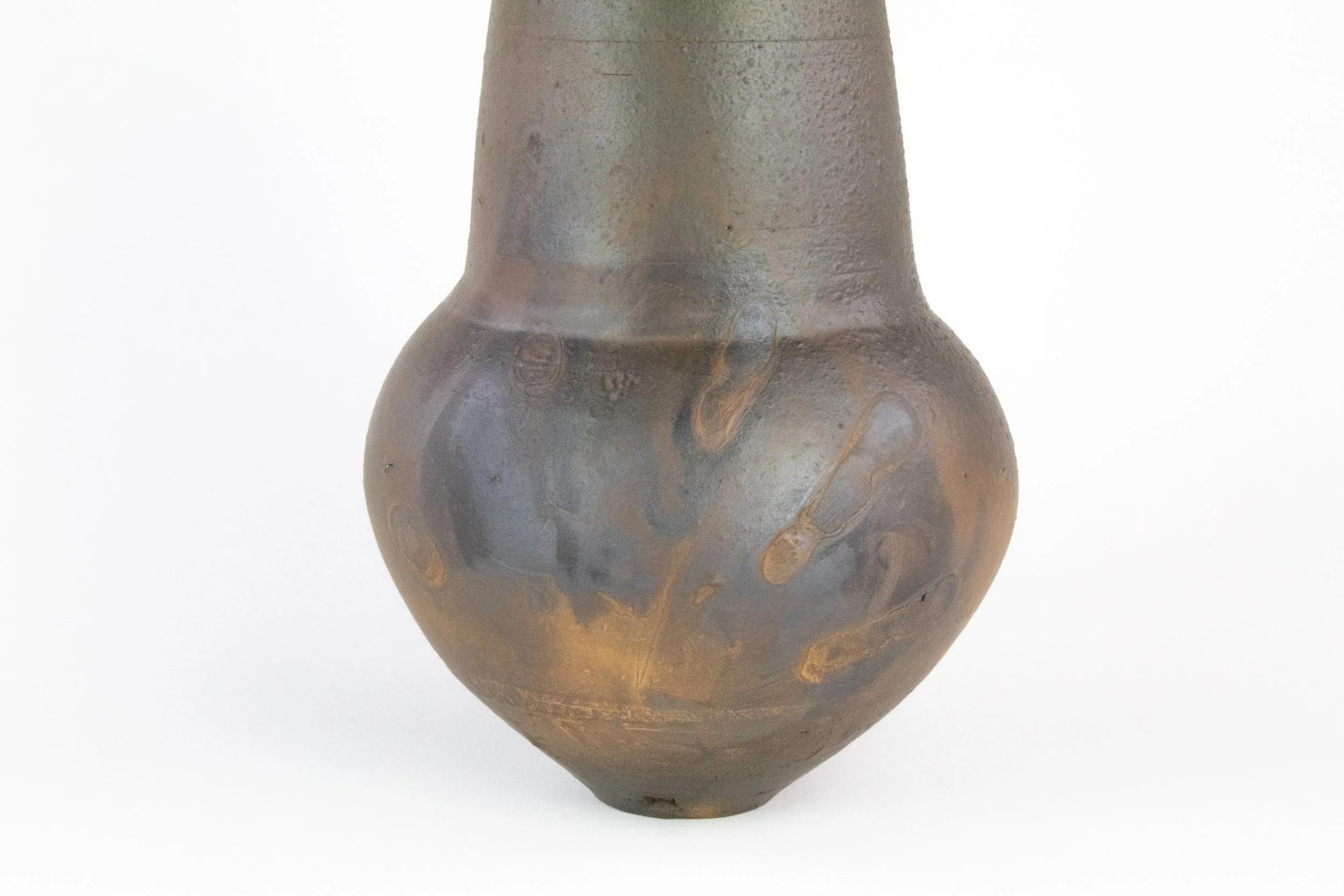
Matthew Wilhelm is a Formalist Potter and Educator. He currently serves as the Robert Chapman Turner Teaching Fellow at Alfred University. He received his Masters of Fine Arts in Ceramics from Indiana University Bloomington and his Bachelors of Fine Arts in Ceramics with a secondary emphasis in Art History from the University of Wisconsin River Falls. Using earthenware and terra sigillata, his work focuses on the formal attributes of the vessel's innate condition of delineating space. His influences range from the forms of the ancient Yayoi peoples to the modernist movement of Minimalism. Wilhelm was a previous artist in residence at Cobb Mountain Arts and Ecology Project where he fired at least one wood kiln a month. His work has been exhibited nationally and has been a featured artist at the Northern Clay Center. He has worked in educational spaces for over a decade, working with students ranging from kindergarten through the university level.

artist statement
artist statement
I consider myself a formalist artist. The foundations of my ideas are based in the elements and principles of art and design. Function is rooted in the aesthetics of form, line, volume, material, texture and color. It is about the truth of the pot and its condition as a vessel's implicit contrivance to hold. The abstraction of the vessel is to assign meaning to that condition of containment, altering from the purpose of holding matter to crafting ideas held by the pot. They are self referential; in my belief to be a pot is to refer to the history of pots. Vessels made to have visual impact, perceived as elegance set in space. Decisively positioned to connect the past and present. Simple in their complexities and loud in their subtleties. They ask me more questions than I have answers and challenge my notions of looking. Pots repeat, in language and ideas, cyclically like they are formed, readdressing ideas from history anew. These are my attempts with my pots, jockeying for space amongst the larger historical cannon prioritising aesthetics and context as concept.