Craft
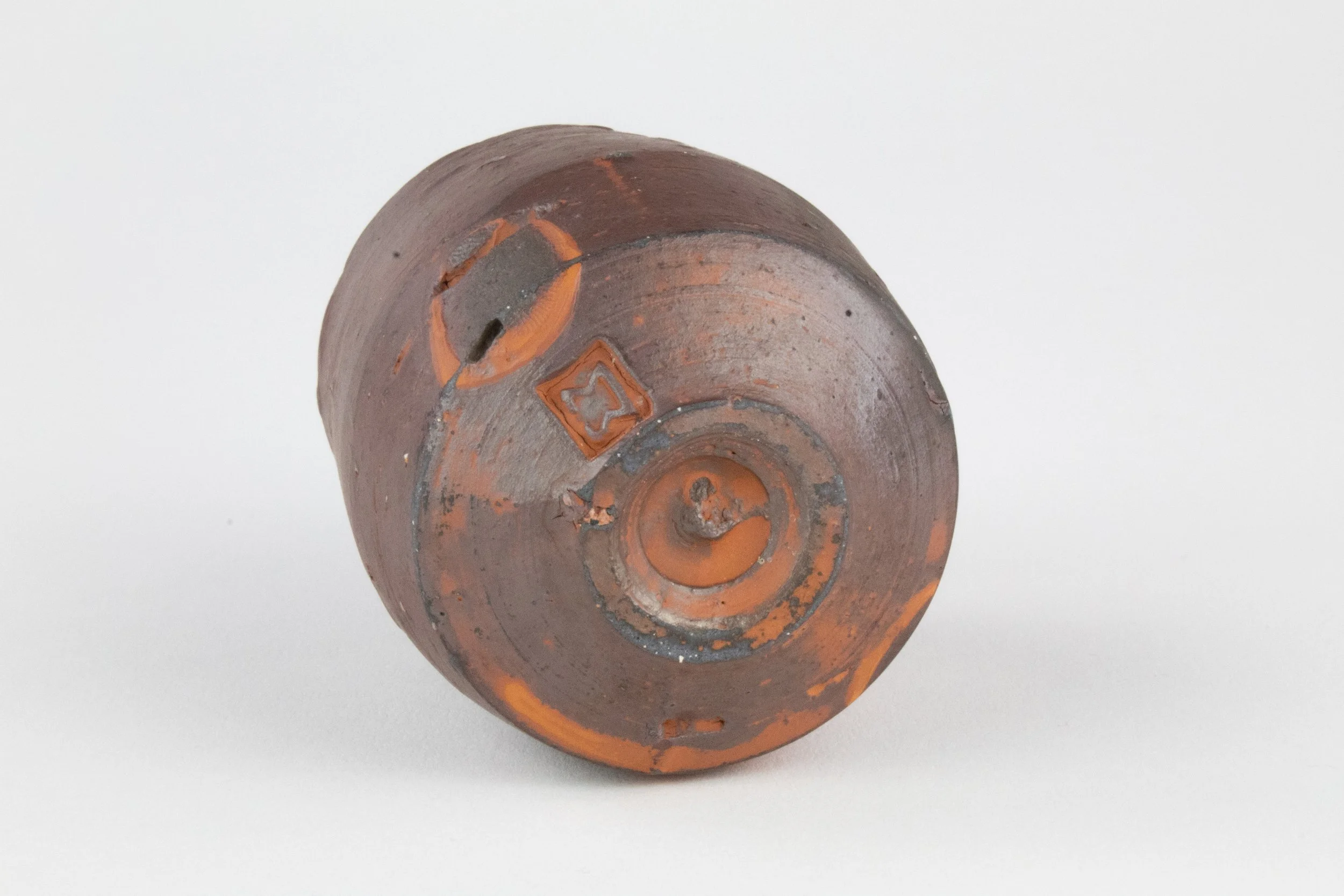
I learned how to make pots in western Wisconsin, only an hour away from the St. Croix Valley region. This area is foundational to the contemporary ideas of modern craft in ceramics. While learning there I was graced with an admiration for materials, process and the artist hand. These qualities are how I have approached my craft ever since. Over the years I have gravitated towards using materials and processes that have their own distinctive attributes. This has lead me to using coarse earthenware and terra sigillata thrown on the wheel and fired to cone 1 in saggars.
Materials
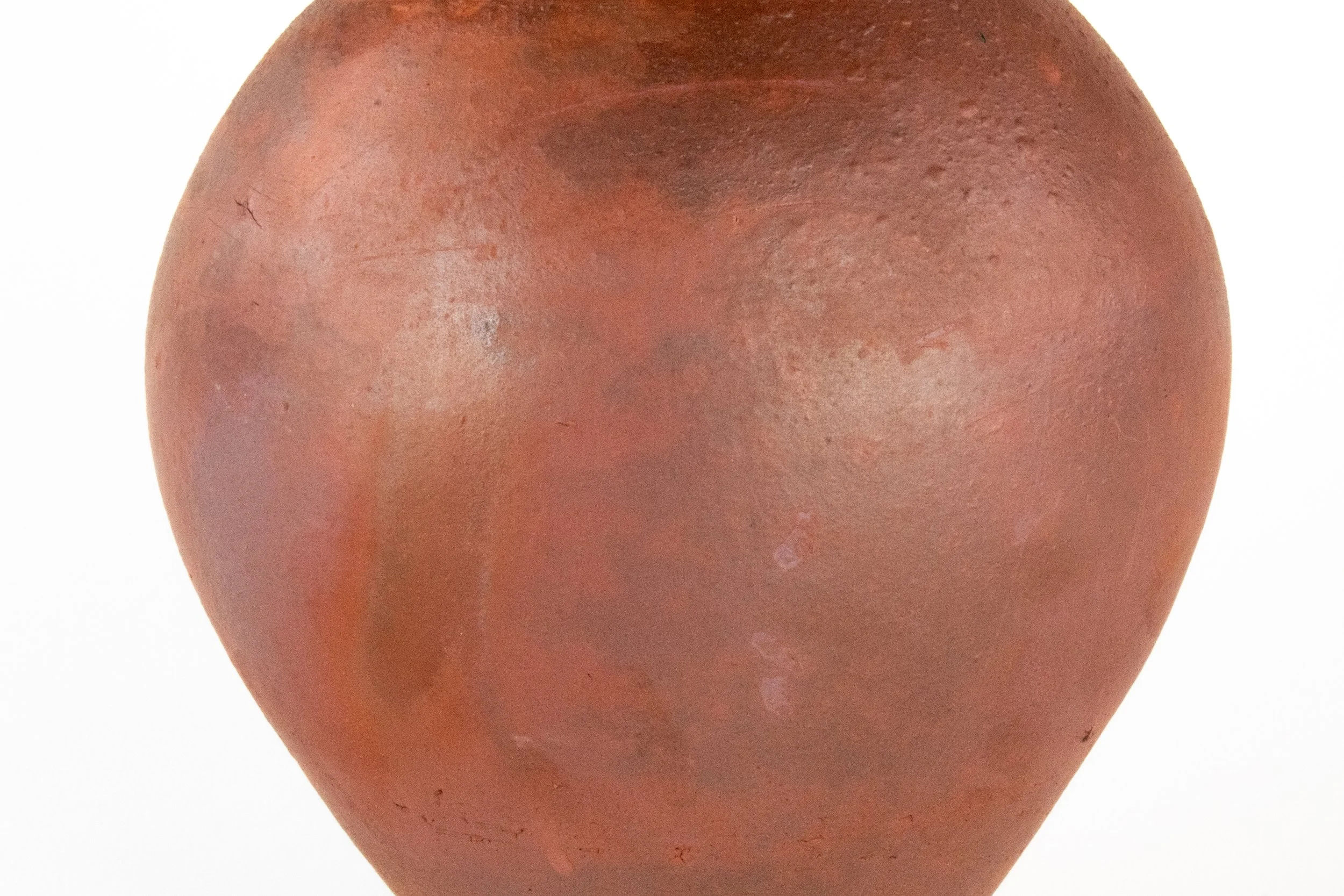
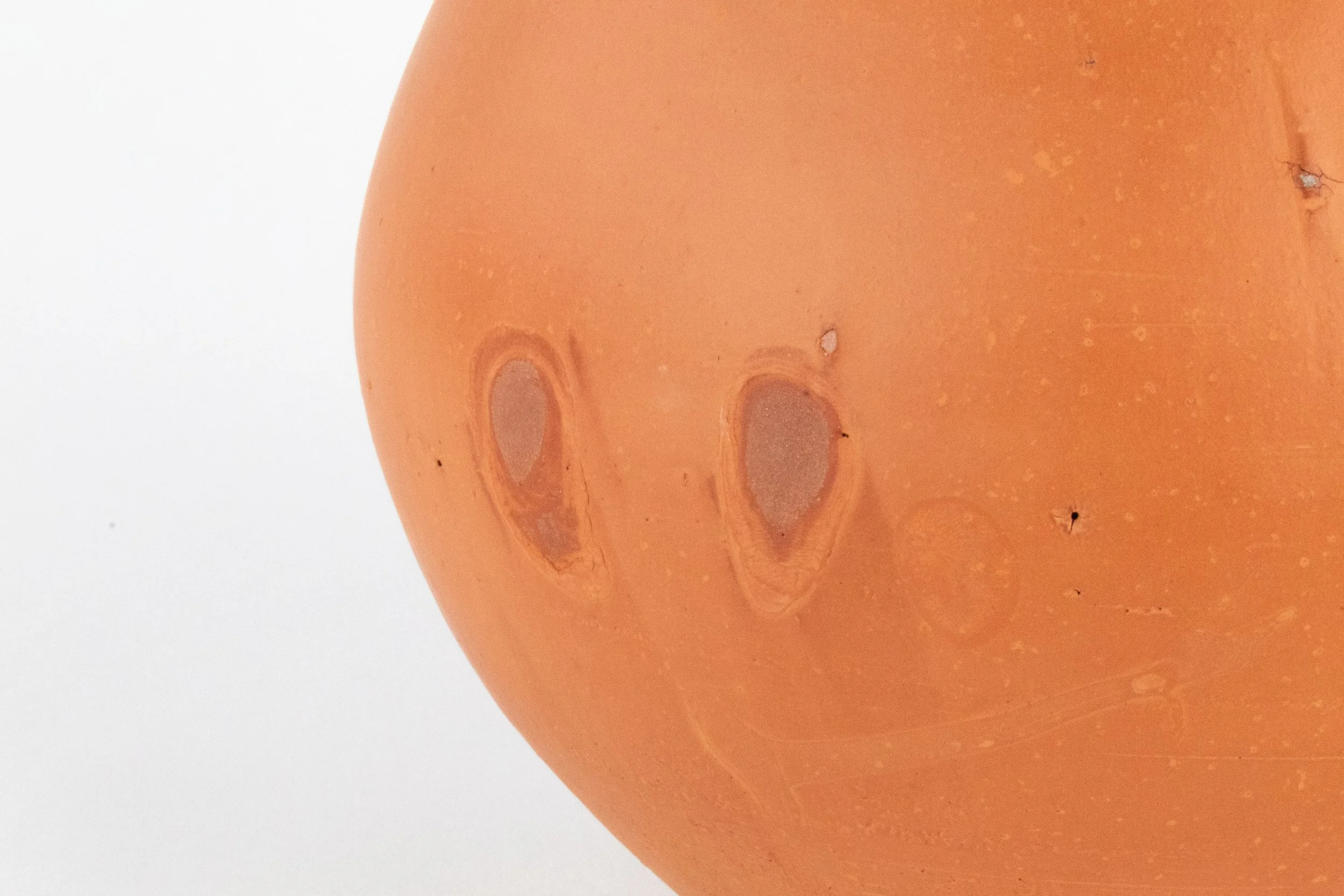
My pots are made of coarse earthenware and terra sigillata. I use aggregate as tool to add variation to forms and textures of the work. Terra sig is used to emphasizes the marks left from my making process. It also responds well in my saggar firing to add a range of color.
Process
My pots are thrown on the wheel, often in multiple parts. I assemble multiple parts so I am able to be precise about the line and volumes. While throwing I am looking for a strong breath and smooth continuous lines. Trimming the works is how I am able to refine forms while additionally adding textural shifts to the surfaces. Once the pots are assembled and bone dry I dip them in terra sigillata leaving figures prints behind. I do not hide any part of my process.
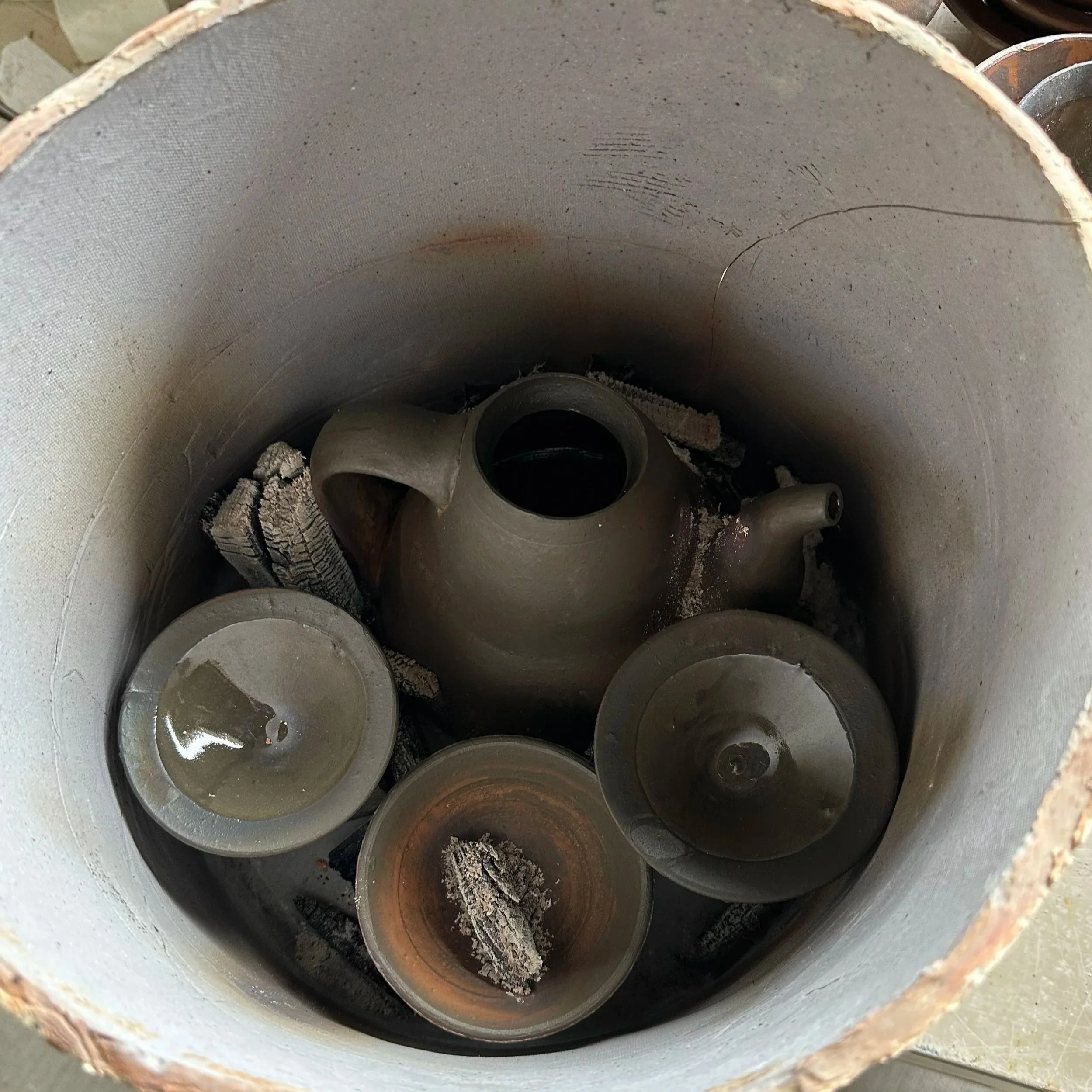
Firing happens in two stages. The first is a bisque firing to cone 1 fully vitrifing the clay. This allows me to glaze any pots for utilitarian purposes and allows for easier loading of my surface firings. My surface firing are were I get the variations of color in my work. The terra sig I use is made from a newmans high iron clay that when fired in an oxidized atmosphere is a bright orange terracotta color but when I reduce the environment the pots are fired in the colors can be red, brown, purples and even a few shade of green. Each pot is loaded in a separate pot called a saggar. For my purposes, the saggar protects the kiln and contains the carbon filled atmosphere. I reduce the atmosphere of the pots with only a few pieces of wood roughly the size of a crayola marker. The use of the wood creates more variation in the work rather than simply firing a reduction kiln. The pots are then excavated from the sagars and washed and sanded.